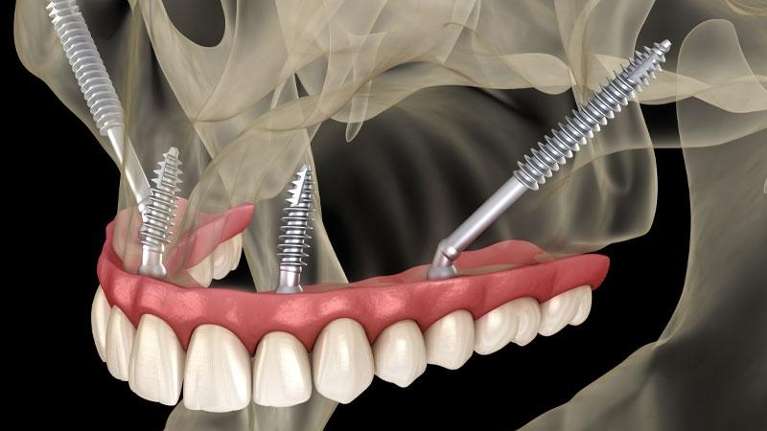
Zygomatic and Pterygoid Implants
Zygomatic & Pterygoid dental implants are a type of tooth replacement that places implants in the zygomatic bone and pterygoid plate, located in the cheek area of the upper jaw. These implants are longer than standard dental implants, providing added stability for patients with significant bone loss in the upper jaw’s cheekbone.
Zygomatic implants are specifically designed to secure a prosthetic tooth, such as a dental bridge or denture, in the upper jaw. These implants are surgically inserted into denser and stronger bones than the jawbone, allowing them to effectively support the prosthetic's weight.
The Benefits:
A solid base for dental restorations: Zygomatic and pterygoid implants create a reliable foundation for restorations like dental bridges or dentures, helping patients regain their ability to speak and eat comfortably.
Ideal for patients with significant bone loss: These implants are a viable choice for individuals with extensive bone loss in the upper jaw who may not qualify for traditional dental implants, eliminating the need for bone grafts.
Quicker recovery: Recovery time after zygomatic implant placement is usually shorter than with traditional implants, allowing patients to resume normal activities within a few days.
Durable: With proper care, these implants can provide a long-lasting solution, lasting many years for patients.
Visually appealing: Zygomatic and pterygoid implants deliver a natural appearance for missing teeth, boosting patients' confidence and self-esteem.
Steps for the procedure:
Consultation: The process begins with a consultation with Dr. Porras who specializes in implant dentistry. During this meeting, your oral health will be assessed to determine if these implants are the right choice for you.
Treatment Planning: If zygomatic and pterygoid implants are recommended, Dr. Porras will create a personalized treatment plan. This plan will identify the best locations for the implants and ensure the prosthetic teeth are properly aligned.
Sedation: Before the procedure starts, the patient will receive IV sedation and anesthetic to numb the treatment area and ensure comfort.
Incisions: The surgeon will make incisions in the gum tissue to reach the zygomatic bone and pterygoid plate, where the implants will be placed. These implants will serve as a stable foundation for the prosthetic teeth.
Abutment Placement: After securing the implants, the surgeon will attach abutments to the top of the implants. These act as connectors, linking the implants to the prosthetic teeth.
Healing Process: Following the procedure, the patient will need time for the implants to fully heal and fuse with the bone. This healing period typically takes several months and requires maintaining good oral hygiene and attending regular check-ups.
Placing the teeth: Once healing is complete, the dentist will attach the custom-made prosthetic teeth, such as a dental bridge or denture, to the implants. These will be designed to blend seamlessly with the patient’s natural teeth, offering an aesthetically pleasing and functional solution.
Success Rate and Longevity
Zygomatic & pterygoid implants have a high success rate, with studies showing that they are a reliable and effective solution for patients with severe bone loss in the upper jaw. These implants are anchored in the zygomatic bone and/ or the pterygoid plate, which is denser and stronger than the jawbone, providing excellent support for prosthetic teeth. When properly placed and cared for, zygomatic implants can offer long-term stability and durability, with success rates comparable to traditional implants. The advanced surgical techniques and materials used in the implant placement further contribute to their overall success, allowing many patients to regain full function and an improved quality of life.
Post-Operative Care and Maintenance
After zygomatic & pterygoid implant surgery, patients will need to follow specific post-operative care instructions to ensure proper healing and implant integration. Initially, there may be some swelling, bruising, and discomfort, which can be managed with prescribed medications. It's essential to maintain excellent oral hygiene, using gentle cleaning techniques to avoid irritation around the surgical sites. A soft diet may be recommended for the first few weeks to prevent putting pressure on the implants. Patients should attend regular follow-up appointments to monitor healing and check implant stability. Long-term maintenance involves routine dental check-ups, professional cleanings, and continuing good oral hygiene practices to prevent infection and ensure the longevity of the implants. By adhering to these care guidelines, patients can help maximize the success and durability of their implants.